No results found, please try a different search term.
Technical services
Why this matters now
-
In Europe, more than 85% of today’s buildings are likely to still be in use in 2050 – yet many are ageing faster than they are being maintained or modernised.
-
Deferred maintenance is becoming technical debt – quietly eroding asset value, carbon performance and day-to-day continuity across portfolios
-
Leading organisations are shifting from site-level management to portfolio-level thinking – connecting asset performance, capital planning and long-term value more effectively.


Why your building portfolio is your biggest hidden liability
Across the world’s major cities, a quiet crisis is unfolding on corporate balance sheets. It is not being driven by a sudden market crash, but by the buildings organisations already own: ageing assets, deferred maintenance and fragmented decisions that are quietly eroding value across entire portfolios.

Why current asset management approaches are no longer fit for purpose
Many organisations still manage technical assets one building at a time, with capital, maintenance and decarbonisation decisions made separately rather than strategically. What looks practical at site level often breaks down at portfolio level, creating fragmentation, misallocated capital and technology investments that fail to improve decision-making.

How leading organisations are rethinking asset management across portfolios
Asset management is no longer only about keeping buildings running. Leading organisations are rethinking how they prioritise investment, connect decisions and manage risk across the wider portfolio, creating stronger resilience, clearer capital allocation and better long-term asset performance.
From Ageing to Ageless: why your building portfolio is your biggest hidden liability
Across the world’s major cities, a quiet crisis is unfolding on corporate balance sheets. It is not being driven by a sudden market crash, but by the buildings organisations already own: ageing assets, deferred maintenance and fragmented decisions that are quietly eroding value across entire portfolios.

When asset decisions are fragmented, portfolios underperform
Buildings are still being managed site by site, while risk, capital and decarbonisation decisions increasingly sit at portfolio level. The result is a fragmented model that creates blind spots, weakens prioritisation and makes it harder to turn data into better decisions.
.jpg?width=1080&height=608&name=Web_Desktop-Facade%20of%20the%20hospital%20building%20(1).jpg)
Why leading organisations are shifting to portfolio intelligence
As lease strategy, asset condition, financial exposure and carbon priorities become more tightly connected, leading organisations are moving beyond site-level decision-making. The shift to portfolio intelligence is helping them direct capital more effectively, reduce risk and make more joined-up decisions across the estate.

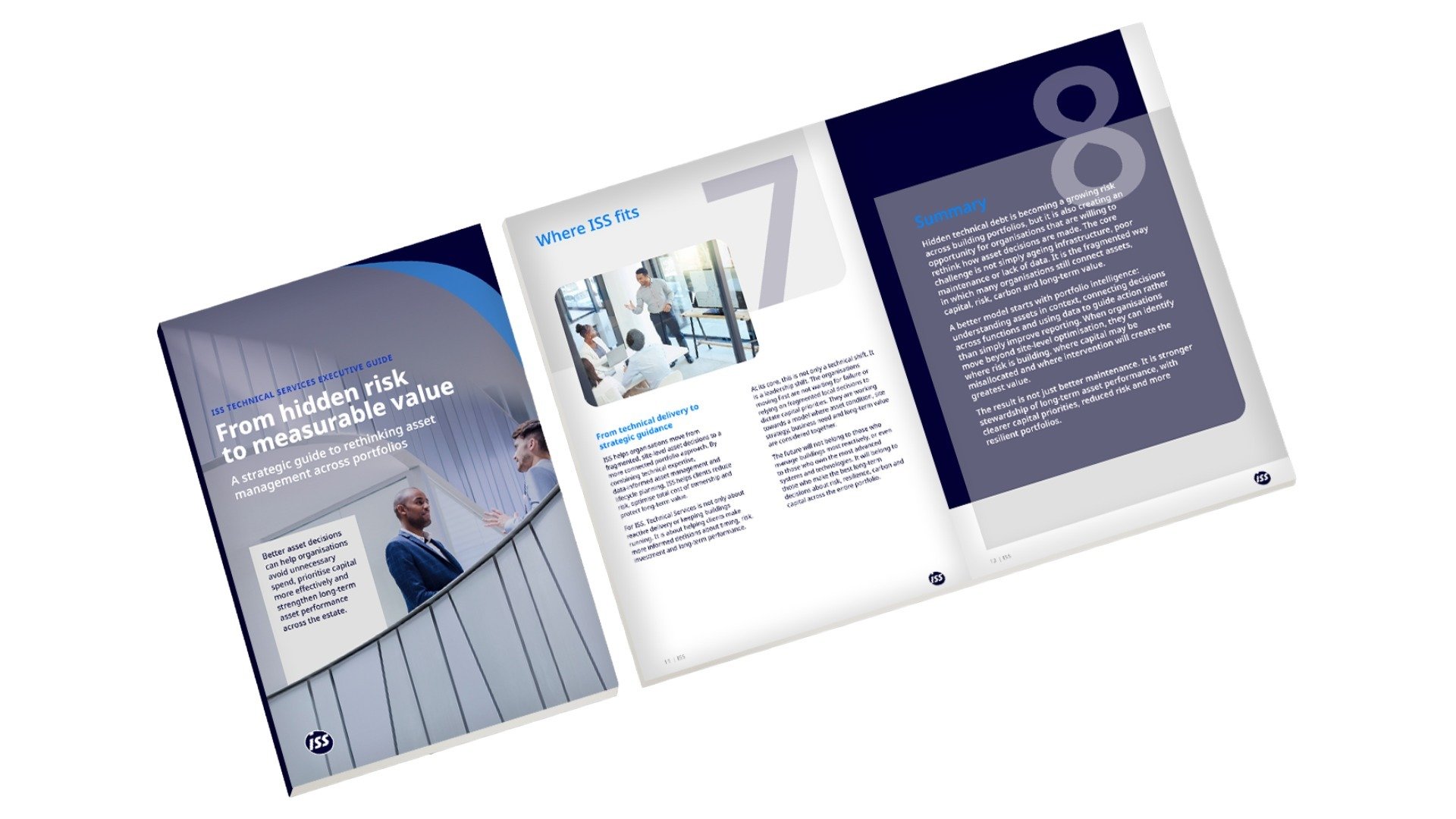
Download your executive guide
From hidden risk to measurable value
A strategic guide to rethinking asset management across portfolios
Discover how leading organisations are reducing risk, improving capital planning and unlocking greater value from their assets.
A better way to make asset decisions
The strongest asset decisions are made with a fuller view of value, not only short-term cost.
Total Value of Ownership (TVO) brings a broader view of asset decisions by looking at operational costs and long-term investment together, rather than in isolation. That makes it easier to make better decisions about when to repair, when to replace and where to invest first across the portfolio.
